Why we need new models for arts journalism
Today, Knight Foundation and the NEA announced the winners of its Community Arts Journalism Challenge. Here, Knight’s Eric Newton gives some insight into why both organizations decided to fund innovations in arts coverage and criticism.
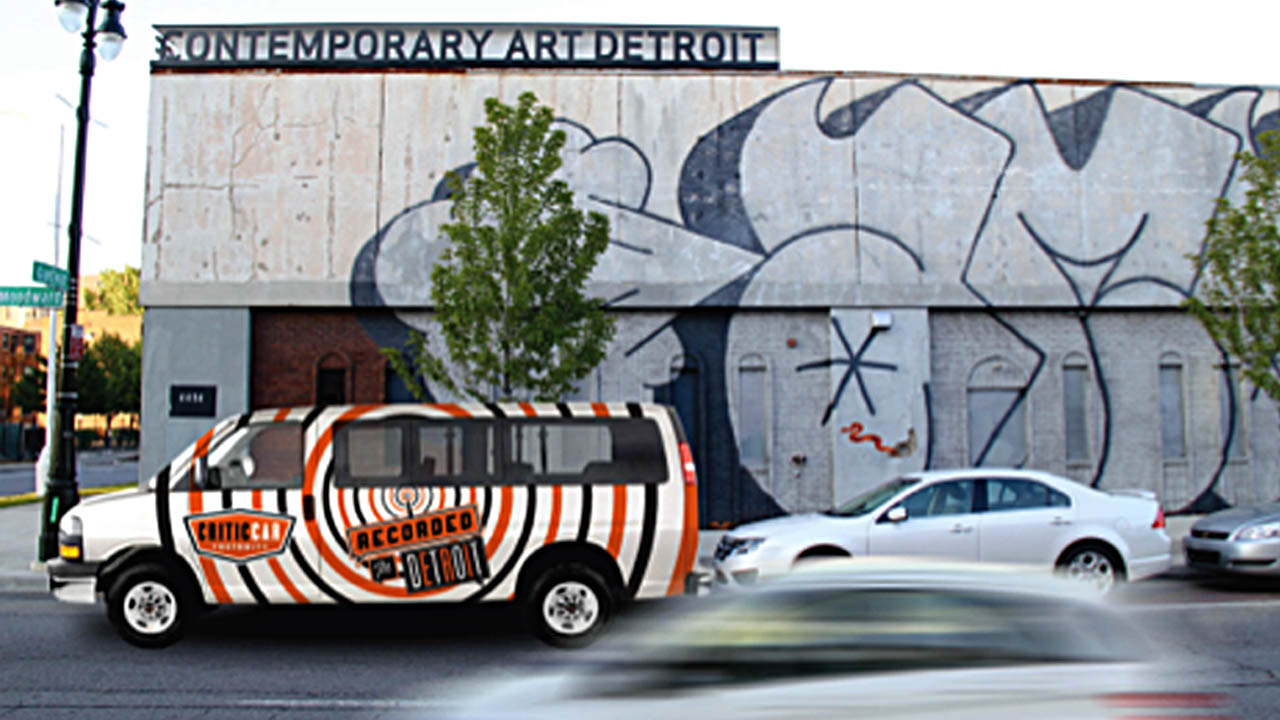
Update: Two of the winning projects, CriticCar Detroit and the Charlotte Arts Journalism Alliance, were recently profiled in The Huffington Post and The Charlotte Observer, respectively.
When Knight Foundation first started working with the National Endowment of the Arts on the issue of arts journalism, we asked four questions: Is arts journalism in trouble? Does it matter? Can anything be done to help? How can we — the Knight Foundation, the nation’s leading private funder of journalism innovation, and the National Endowment for the Arts, the nation’s leading advocate for the arts – improve the situation. Let’s look at the questions and answers:
1. Is arts journalism in trouble?
Nationally, arts journalism is doing well. Locally, it is not.
Nationally, the medium of film is an example of the positive post-internet trend. Even as film critics shrink in traditional media, the victims of the new economics of the digital age, they are blooming in cyberspace. Typical was famed film critic Roger Ebert reporting in his January 2011 Wall Street Journal article, “Film Criticism is Dying? Not Online.”:
“The Web and HTML have been a godsend for film criticism. The best single film criticism site is arguably davidbordwell.net, featuring the Good Doctor Bordwell and his wife Kristin Thompson. Their names are known from their textbooks, studied in every film school in the world. But they are not users of the obscurantist gobbledygook employed by academics who, frankly, cannot really write. They communicate in prose as clear as running water.”
Locally, however, the story is quite different.
ArtsJournal.com editor Douglas McLennan estimated that in 2006 there may have been about 5,000 people covering arts beats for American newspapers. Now, he believes that number has been cut in half. This is a rate of cutback higher than average: the American Society of News Editors census shows that in the past decade, one in four newsroom jobs have been lost.
Even more than typical community journalism, then, traditional local arts journalism in the United States is going through a messy, uneven digital transition, simply disappearing in many communities.
Reported former Orlando Sentinel theater critic Elizabeth Maupin in her article for Harvard’s Nieman Reports, “A Journalistic Vanishing Act”:
“Intelligent Internet journalists are taking up the slack, at least in some cities … websites exist for theater, books, art, dance and other kinds of music, and more are springing up all the time. Yet many of those sites don’t pay their writers, and most struggle to make ends meet. In many cities, especially smaller ones, substantive blogging has not sprung up to replace what has been lost. ”
2. Does it matter?
The Knight Commission for the Information Needs of Communities in a Democracy would say it does. News and information, the bipartisan commission said, is as important to community well being as any other major issue – safety, the environment, education – and, in fact, quality flows of news and information are necessary to determine how a community is progressing on any issue.
Like news itself, the arts are a type of glue that can hold communities together. Gallup Research funded by Knight Foundation, called Soul of the Community, shows the openness, social offerings and physical attractiveness of communities bind people to those communities and are linked to their prosperity.
It is difficult to imagine how a community can fully feel the benefits of the arts in the absence of a quality flow of news and information telling who is doing what, showing what’s available, explaining what people are saying, providing critical reviews and feature stories on artists and their art, and demonstrating how arts serves as a community catalyst and betters our lives.
3. Can anything be done to help?
Journalism in America does not need to be saved, the Knight Commission says, so much as it needs to be invented. Rather than embark on the search for the past, for a golden age that may not have really existed, the commission urges us to look ahead.
This means being agnostic about the delivery mechanisms of news. If, as Pew research indicates, digital news is becoming more portable, personal and participatory, then the question would be: How can arts journalism do this? How can it be this?
Arts journalism has instructive parallels to other crucial forms of specialty journalism that are also endangered. Perhaps the largest category of “missing journalism” as traditional media makes the difficult transition to digital media is in the area of investigative journalism. What arts journalism is to community life, investigative journalism is to self-governance. Both are specialties involving training to reach the highest levels of understanding. But both are fields of personal engagement and interest. Americans have strong opinions about how they should run their lives and their communities. This opens the door to new forms of community engagement in both arts journalism and investigative journalism. Unfortunately, like investigative journalism, arts journalism has been easy to cut.
As investigative reporting has dropped out of daily newspapers, individuals and communities have been willing to donate funds to see it done in new digital formats. Nonprofit news sites have started in nearly every state. Their funding varies radically from state to state. But a new study by the Investigative News Network shows that these startups have fared better than both the average business startup and the average nonprofit startup. I think this is because the journalists running them do not think failure is an option. More importantly, I think it’s because what they are doing is important.
The ultimate future of these new nonprofit sites, like the future of news itself, is uncertain. They are providing thousands of investigative stories being seen by as yet uncounted millions of people. The finest news organizations in America are using their work. Community impact of these sites has ranged from the immediate firing of the entire California Nursing Board for not acting to stop nurses who were killing patients (ProPublica, Los Angeles Times) to new investigation procedures and the payment for a new motorcycle for a man who was hit by a police car but then blamed for the accident (Voice of Orange County).
If what Harvard professors call the “creative destruction” of our traditional news systems is only a temporary event, and the commercial side eventually corrects itself, these sites will have provided crucial watchdog content to help during the transition. If the structural changes affecting journalism are permanent, and some content no longer has commercial support, period, then these sites are a start toward a search for a solution.
Knight Foundation has funded many of these startups and helped lead them in a period of self-study. We find that the ones who seem strongest have what could be called the “four c’s” – content, connectivity, community and cash. Each of these elements involves engagement. Is the content compelling and engaging? Is the technological connectivity engaging people how, when and where they want to use news? Is the community engaged in the news and information flow not just as consumer but as provider? Are the business practices professional and aimed at developing multiple revenue streams by engaging the entire community?
To sum up, Knight tries not to resurrect the past but help the future emerge in its new, sustainable, local forms. We are not interested in the agribusiness of news so much as we are the family farms. We’re not interested, metaphorically, in international energy conglomerates so much as we are solar power on rooftops. We haven’t been interested in endowing news and information programs because of concerns about how guaranteed funding might remove incentives for the crucial connections needed between community and news providers.
What’s interesting about arts journalism in this mode is that, unlike investigative journalism, there are already functioning around existing economic systems in virtually every community. No one buys a ticket to go to the city council meeting or an ethics hearing or a court trial. But people every day happily purchase tickets to see theater, dance or exhibitions and to hear music. Under their own power, in places like Peoria, these organizations have banded together to create new information hubs on the web – they see it clearly in their best interest. This offers economic and partnership possibilities beyond what we are seeing in investigative reporting.
4. How can NEA and Knight show their interest and concern?
Interestingly, both NEA and Knight have previously funded university-based programs to train traditional arts journalists. But we’re both taking a break from that. In past decades, such programs helped train new staff when traditional news organizations were adding reporters. New arts reporters always benefitted from additional education. It was a model that worked well when traditional journalism was growing. But in recent years, as traditional journalism cut back, both our organizations became concerned about “training people for jobs that no longer exist.”
NEA and Knight already have a track record of working together on ArtPlace, a place-based program to help revitalize arts in communities, with both federal leadership and a consortium of philanthropic leaders.
This raised an obvious question: Is there an equal to ArtPlace for arts journalism? Could the two organizations partner in a Request for Proposal process that would allow the eight resident Knight Communities to propose new forms of arts journalism?
The idea there is that the Knight communities are a good cross section of America, and represent living laboratories where interesting news and information experiments can be tried. The foundation itself has tested this topic area, in a way, with news generation by its arts program site, KnightArts.org, receiving significant web traffic and being used on the web home page of a newspaper as important as The Miami Herald.
We thought we should be as open as possible to new ideas: collaborative with unusual partners, new approaches, proposals that achieved both arts journalism goals and others, such as education. These would be projects that would improve the flows of arts journalism in their communities – and have a good chance of sustaining themselves.
Perhaps, if we held an open contest in the eight Knight resident communities, the winners and the runner’s up would represent the kind of fresh thinking and aggressive action that the Knight Commission is calling for. Our hope was that the contest would encourage the emergence of the arts news techniques, technologies and networks of the future.
Some lament the disaggregation of news, the unpacking that leaves specialty reporting fending for itself in the digital age. But to the entrepreneurial this is a time of great excitement. For the first time in generations, we can actively work to find brand new ways of providing the news and information that helps people run their communities and their lives. In the era of creative destruction of traditional media, we can emphasize creation.
That’s how we came to the idea of the Community Arts Journalism Challenge, and given the extraordinary numbers of entries and the high-quality winners being announced today, we’re glad we did.
By Eric Newton, senior adviser to the president at Knight Foundation
Recent Content
-
Artsarticle ·
-
 Artsarticle ·
 -
 Artsarticle ·