Getting Wikipedia to the people who need it most
The Wikimedia Foundation recently received Knight News Challenge funding to create ways to deliver Wikipedia for free to users in the developing world. Below, its head of mobile, Kul Takanao Wadhwa, writes about the project.
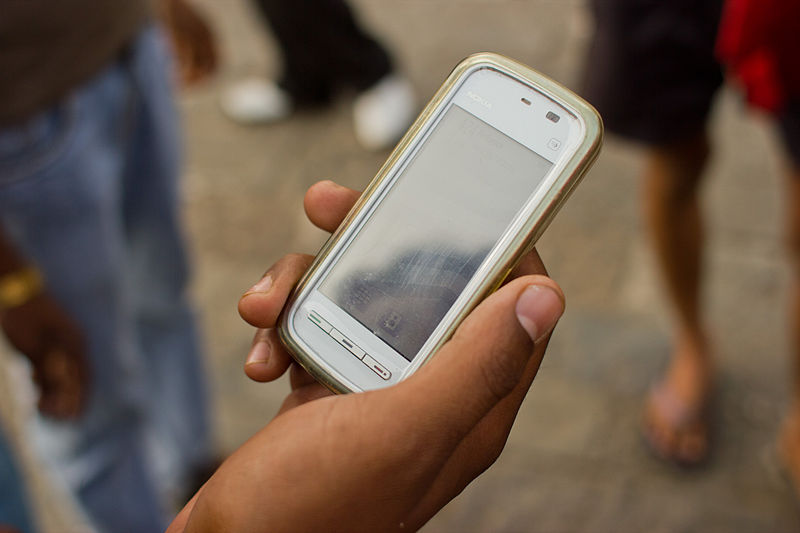
We’re in the middle of an information revolution that’s changing the way billions of people in developing countries obtain news and knowledge. With a $10 cell phone, a high school student in New Delhi or a cab driver in Dakar can access the Internet and — through Wikipedia and other websites – learn volumes about virtually any subject. If knowledge is power, then the developing world, with almost five billion cell-phone subscriptions, is poised to make amazing changes. There’s just one catch: An overwhelming percentage of new mobile users in India, Senegal and other developing countries can’t afford data charges, so they’re effectively excluded from sites like Wikipedia. It’s a de facto blackout, a kind of information segregation that shunts potential Internet users to the side of a very important road. That’s why the Wikimedia Foundation, the nonprofit that operates Wikipedia, has established Wikipedia Zero, a program where we partner with mobile operators to give their mobile users free-of-charge access to Wikipedia and its growing trove of 24 million articles. In 2012, the Wikimedia Foundation signed Wikipedia Zero partnerships with three mobile operators, which is bringing free Wikipedia access to 230 million mobile users in 31 countries. In January of 2013, we signed a fourth partnership that extends Wikipedia Zero to at least 100 million more mobile users in five more countries. And with the recent support of the Knight News Challenge grant, designed to accelerate media innovation by funding breakthrough ideas in news and information, a series of exciting new developments is on the horizon. We are: speeding up the development of Wikipedia Zero; hastening the development of the software that lets a simple feature phone (the dominant phone in developing countries) connect easily to Wikipedia’s mobile site; augmenting the development of the engineering that, on Wikipedia, makes hundreds of native languages readable from mobile devices; and pioneering a program to give mobile users USSD & SMS access to Wikipedia. We’re very excited about delivering Wikipedia via text, which we expect to roll out within the next few months. With the program, users will send a text request to Wikipedia and, within seconds, they will get the article to their phone. To deliver this innovative technology, we’re partnering with the Praekelt Foundation, a nonprofit based in Johannesburg, South Africa. It’s another example of the tremendous collaborative spirit that has always driven Wikipedia and always will. The number of mobile users who can get free access to Wikipedia is increasing rapidly, and so is its usage. In the countries where Wikipedia Zero has already been deployed, Wikipedia readership of local, non-English languages grew upwards of 400 percent in six months#. On our partner’s network in Niger, Wikipedia’s mobile traffic increased by 77 percent in the first four months of Wikipedia Zero, compared to 7 percent growth on Niger’s mobile networks that don’t have Wikipedia Zero. In Kenya, the growth from Wikipedia Zero was even higher – 88 percent. The demand is there for much more growth, and word-of-mouth is spreading. And the movement for access to knowledge is coming from all sides. Last December, a group of 11th-graders at Sinenjongo High School in Cape Town, South Africa, wrote a heartfelt letter to four mobile operators, imploring them to give their South African customers free-of-charge mobile access to Wikipedia. They had learned about Wikipedia Zero, even though the service is not yet available in South Africa. The Cape Town students have the technology in their hands, but they lack the money to pay for data charges. In their letter, which was published in Gadget, an online South Africa magazine that covers consumer technology, the 24 students wrote:
“We recently heard that in some other African countries like Kenya and Uganda certain cell phone providers are offering their customers free access to Wikipedia. We think this is a wonderful idea and would really like to encourage you also to make the same offer here in South Africa. It would be totally amazing to be able to access information on our cell phones which would be affordable to us.
Our school does not have a library at all so when we need to do research we have to walk a long way to the local library. When we get there we have to wait in a queue to use the one or two computers which have the internet. At school we do have 25 computers but we struggle to get to use them because they are mainly for the learners who do CAT (Computer Application Technology) as a subject. Going to an internet cafe is also not an easy option because you have to pay per half hour. 90% of us have cellphones but it is expensive for us to buy airtime so if we could get free access to Wikipedia it would make a huge difference to us…Our education system needs help and having access to Wikipedia would make a very positive difference. Just think of the boost that it will give us as students and to the whole education system of South Africa.”
Their letter is a reminder that the human spirit craves access to free information. Indeed, I firmly believe that access to free knowledge should be a universal human right. News and knowledge change lives for the better. They always have. From the beginning of the Wikimedia movement, and more broadly across the free knowledge movement, the goal has been to break down the digital divide, and render barriers to knowledge obsolete. There’s no better time than now to make gigantic inroads in that quest. Eighty percent of all new mobile phone subscribers are in developing countries, according to the United Nations’ International Telecommunication Union. For now, of the 25 countries that have the highest rate of mobile traffic on Wikipedia, 22 are developing countries. The top eight countries are all in Africa. We will do what it takes to get free knowledge into the hands of students like those in South Africa who are clamoring for it. We will continue partnering with mobile operators who donate their resources to the service of Wikipedia Zero. In the next two years, we will write more blog posts that detail the progress we make in the developing world. The Knight News Challenge mobile grant is an important milestone in our movement to make free knowledge available to everyone, including every person in the developing world. We see 2013 as a year of significant transition as we make our vision a long-term reality. As I said, access to knowledge should be a human right. And the Wikimedia Foundation is thrilled to be part of the Information Revolution that is bringing free knowledge around the world. We want others to join us, and as the 11th-graders in South Africa have shown us, to also be leaders in this movement. With hard work and true partnership, this dream will become a reality for the students in South Africa, and indeed, everyone, everywhere.
By Kul Takanao Wadhwa, head of mobile for Wikimedia Foundation
Recent Content
-
 Journalismarticle ·
 -
 Journalismarticle ·
 -
 Journalismarticle ·